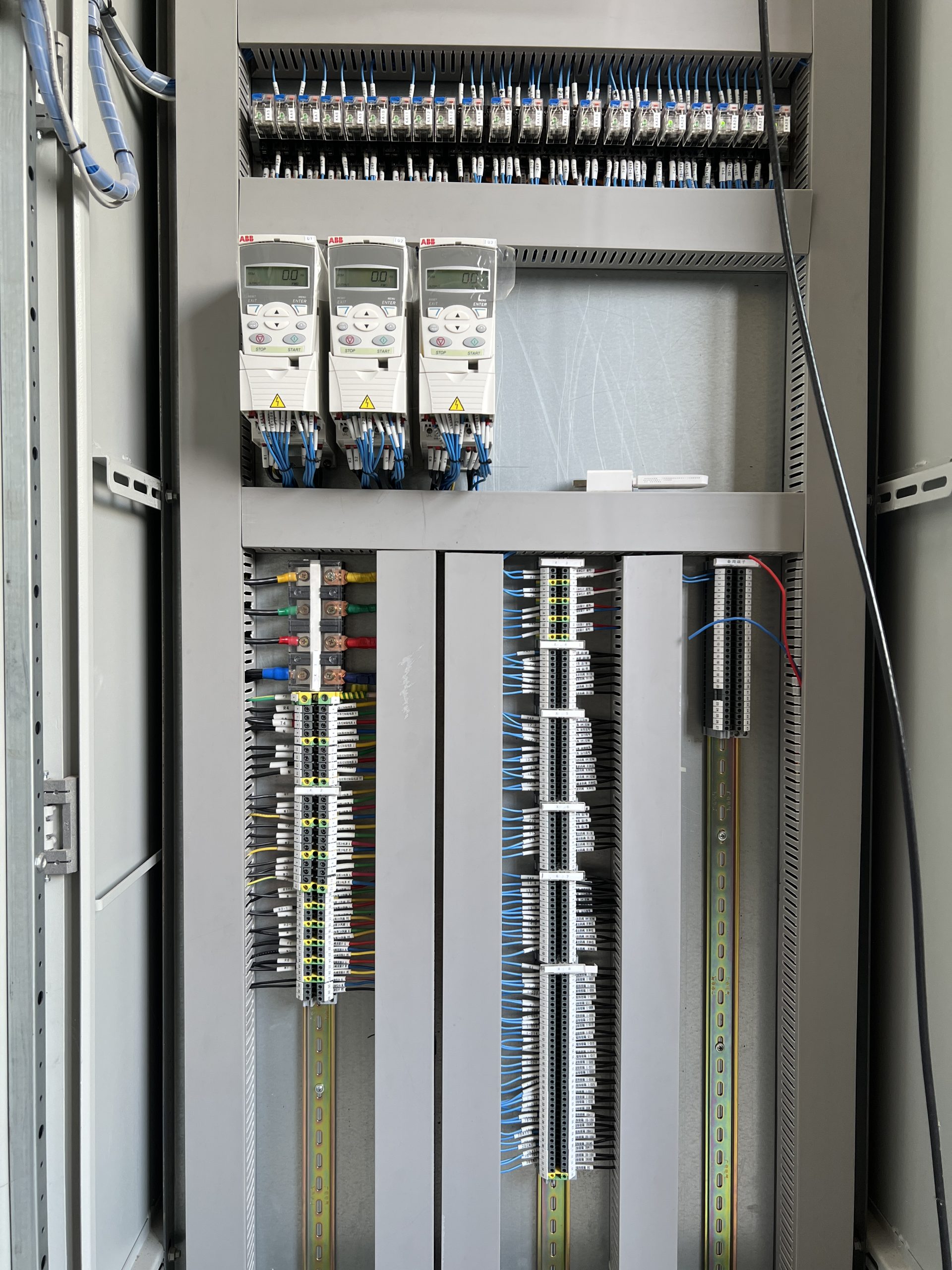




Description
Our mechatronic units combine mechanical systems, electric drives, sensors and intelligent control in integrated assemblies for automated equipment. Each unit is engineered for its task and tested in our Hangzhou factory before delivery.
Industrial Mechatronic Devices Overview
Modern automation increasingly relies on equipment that can move precisely, measure what it is doing and adjust itself. Instead of buying motors, gearboxes, sensors and controllers separately and integrating them on site, a mechatronic unit brings them together in one engineered package with matched components and tested control software. This shortens installation, improves repeatability and makes maintenance simpler, because one supplier is responsible for the whole function.
Typical Building Blocks
| Element | Examples |
|---|---|
| Mechanical | Frames, linear guides, gearboxes, couplings, actuators |
| Drives | Servo drives and motors, VFD-fed motors, stepper drives |
| Sensing | Encoders, proximity and limit switches, position, force, pressure and temperature sensors |
| Control | PLC or motion controller, safety relays, HMI |
| Communication | PROFINET, EtherNet/IP, Modbus, CANopen |
Key Benefits
- Precision and repeatability – closed-loop control of position, speed and force.
- Faster commissioning – mechanics, drives and software tested together before shipment.
- Compact integration – fewer separate components and cabinets on site.
- Diagnostics – drive and sensor data available to the control system for condition monitoring.
- Single responsibility – one supplier for mechanical, electrical and software performance.
Applications
- Automated valves, gates and dampers in water, power and process plants
- Positioning and handling systems in manufacturing lines
- Feeding, dosing and conveying equipment
- Test benches and special-purpose machines
- Retrofits adding automation to manually operated equipment
How We Develop a Unit
- Task definition – loads, strokes, speeds, accuracy, duty cycle and environment.
- Concept – mechanical arrangement, drive and sensor selection, control architecture.
- Detailed design – drawings, electrical schematics and software structure, reviewed with you.
- Build and programming – mechanical assembly, wiring, drive setup and control software.
- Testing – functional and endurance checks, with a factory acceptance test on request.
- Delivery and support – installation guidance, commissioning, training and spare parts.
Integration With Your Control System
Units can run stand-alone with their own controller and HMI, or be controlled by your plant PLC or DCS. We agree the interface — commands, status, alarms and data — in an interface list and test it before shipment. See our PLC and DCS cabinets and system integration services.
Safety
Moving machinery must be safe for operators and maintenance staff. Designs include guarding, emergency stops, safety relays or safety PLC functions, safe torque off on drives and clear isolation points, following the applicable machinery safety requirements for your market.
What to Send for a Quotation
- Description of the task and the equipment to be automated
- Loads, motion ranges, speeds and required accuracy
- Operating environment and duty cycle
- Control interface and preferred brands
- Quantity and delivery date
Talk to our engineers about custom automation solutions or request a quote.
Why Choose Danli
Our mechanical, electrical and software engineers work together on every unit, and the same team supports it after delivery. We document each design so spare parts and future changes are straightforward, and we can scale from a single prototype to a series of identical units.
Example: Automated Gate Actuation for a Water Plant
A water treatment plant wants to automate a set of manually operated channel gates. We design a compact unit for each gate: a geared motor with a VFD for smooth starting and stopping, absolute position feedback, end-of-travel and torque protection, a local control station with hand/off/auto selection, and a small controller that receives open, close and position commands from the plant PLC. Each unit is assembled and tested on a test rig in our factory, so on site the installer only mounts it and connects power and communication. Operators can then position gates precisely from the SCADA screen, and the system records running hours and faults for maintenance planning.
Quality and Documentation
Every unit is delivered with mechanical drawings, electrical schematics, a parts list with supplier part numbers, drive parameter backups, control software, test records and an operation and maintenance manual. Critical components are sourced from established brands so replacements are easy to obtain, and our after-sales team keeps records of every unit for spare parts and future modifications.
Maintenance
Mechatronic units need simple, regular attention: checking fasteners and lubrication, inspecting cables and connectors on moving parts, reviewing drive fault logs and verifying sensor calibration. Built-in diagnostics make it easy to spot wear before it causes downtime.
Choosing Between Standard and Custom Units
Where a standard actuator, drive package or positioning module already fits the task, we use it, because proven designs reduce cost and lead time. A custom unit makes sense when space is limited, loads or speeds are unusual, the environment is harsh, or several functions must be combined in one assembly. During the concept stage we compare both options on performance, cost, delivery and maintenance, and recommend the one that best fits your project.
Frequently Asked Questions
What is a mechatronic device?
A mechatronic device combines mechanical parts, electric drives, sensors and control electronics in one unit, so it can move, measure and react automatically instead of relying on separate components wired together on site.
Can mechatronic units be customised?
Yes. Mechanics, drives, sensors and control logic are selected for the task, load, speed, accuracy and environment of each application.
How do they connect to my control system?
Through hard-wired I/O or industrial networks such as PROFINET, EtherNet/IP or Modbus, so they can be controlled and monitored by your PLC or SCADA.
Are units tested before delivery?
Yes. Mechanical movement, drive parameters, sensor signals and control functions are tested in our factory before shipment.