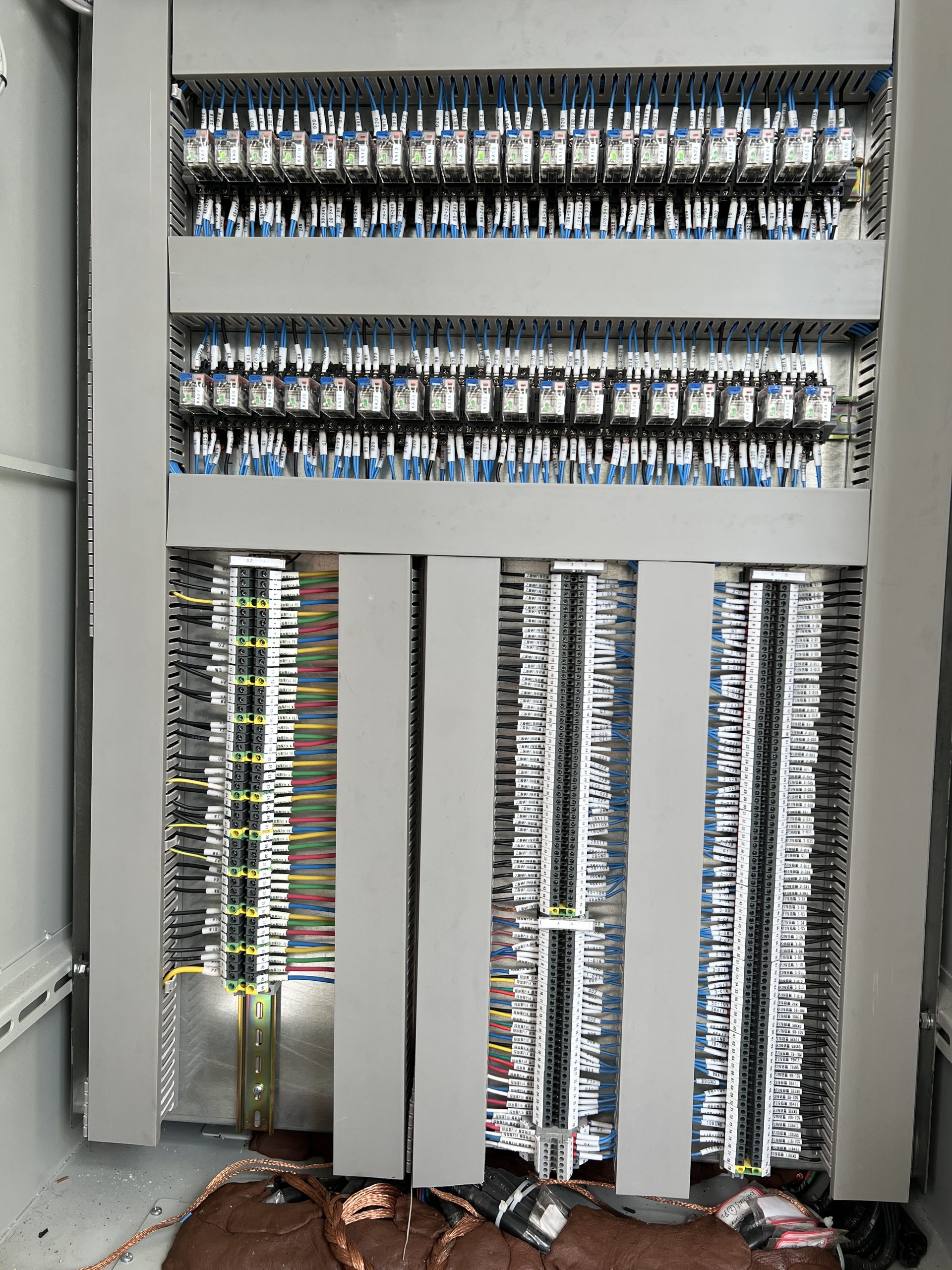
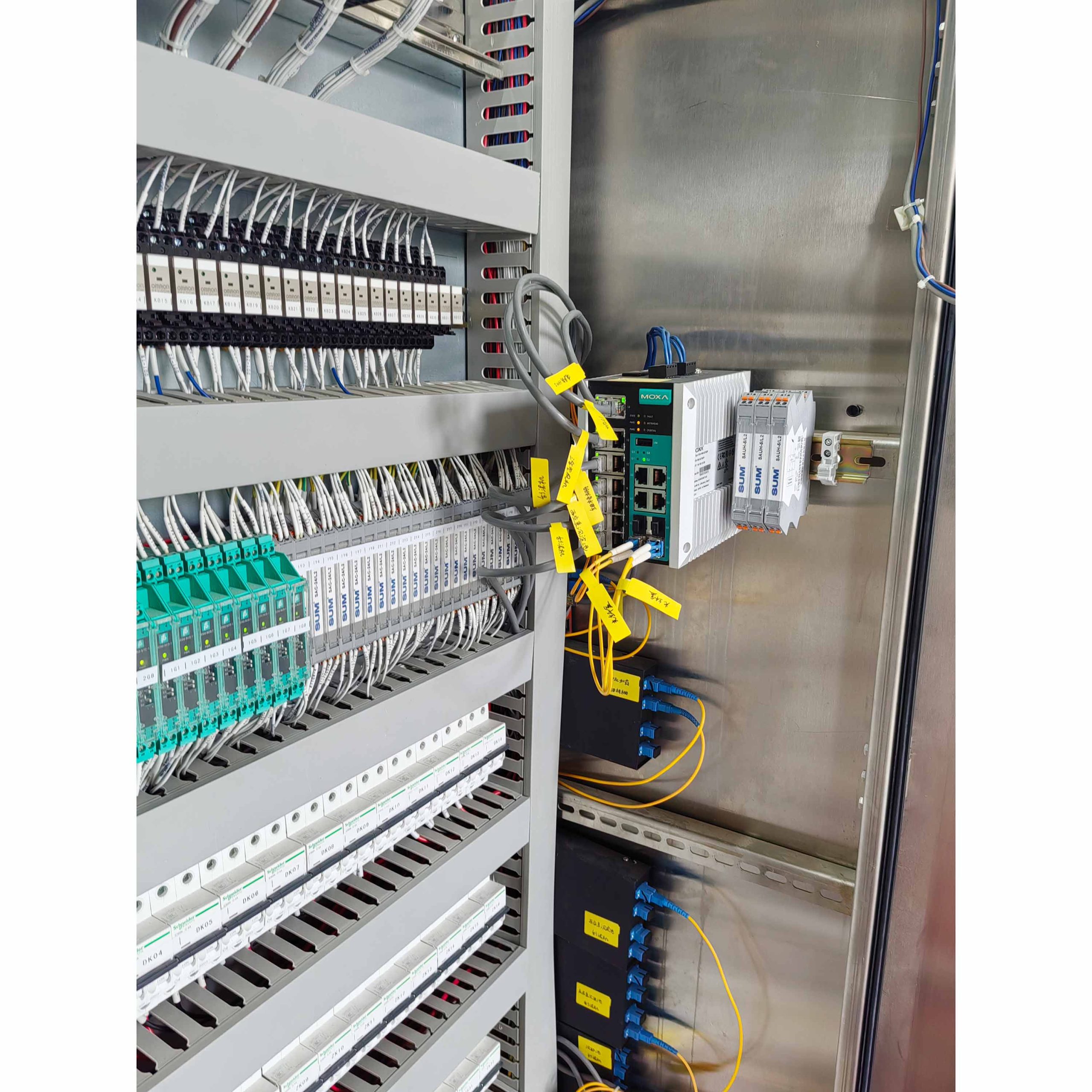
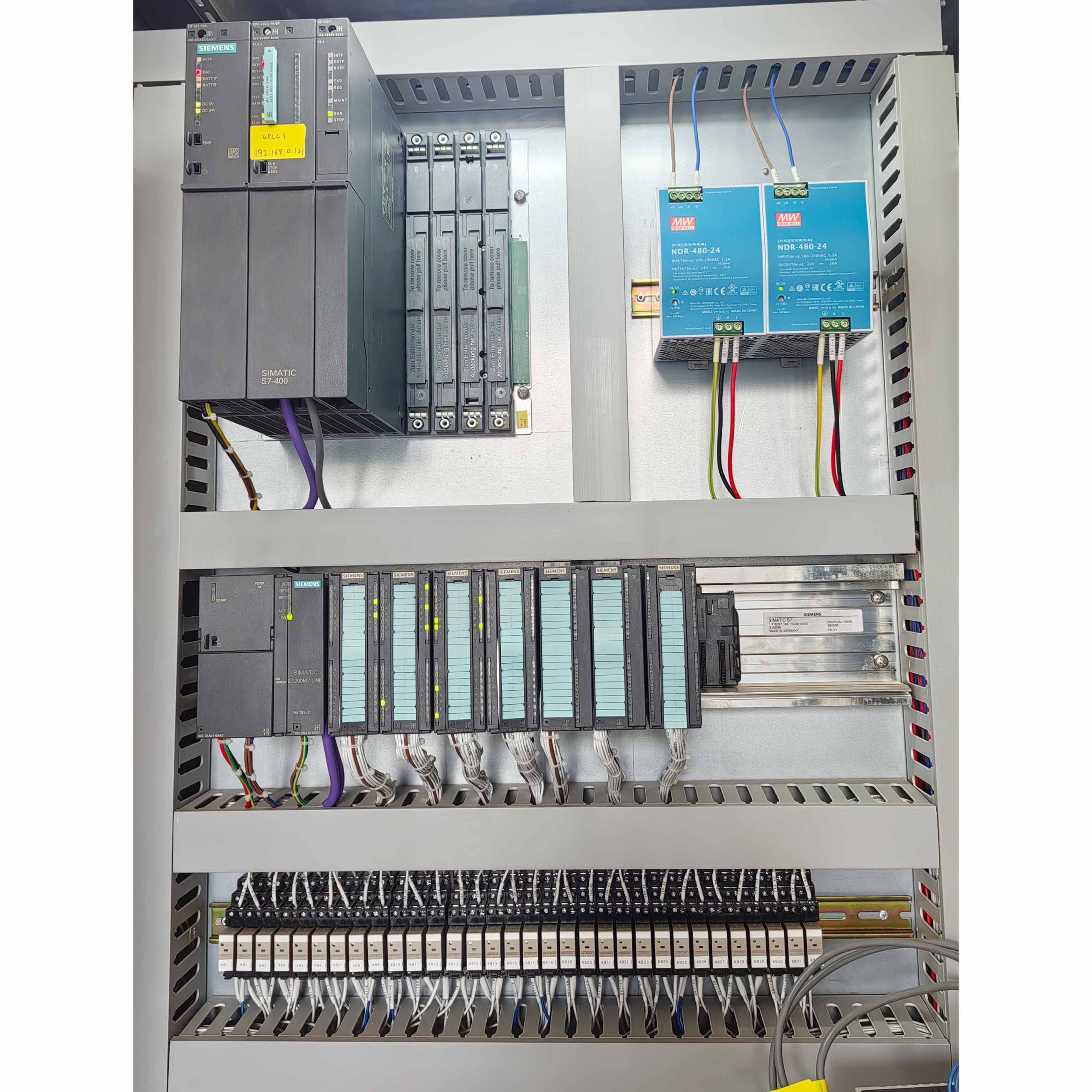




Description
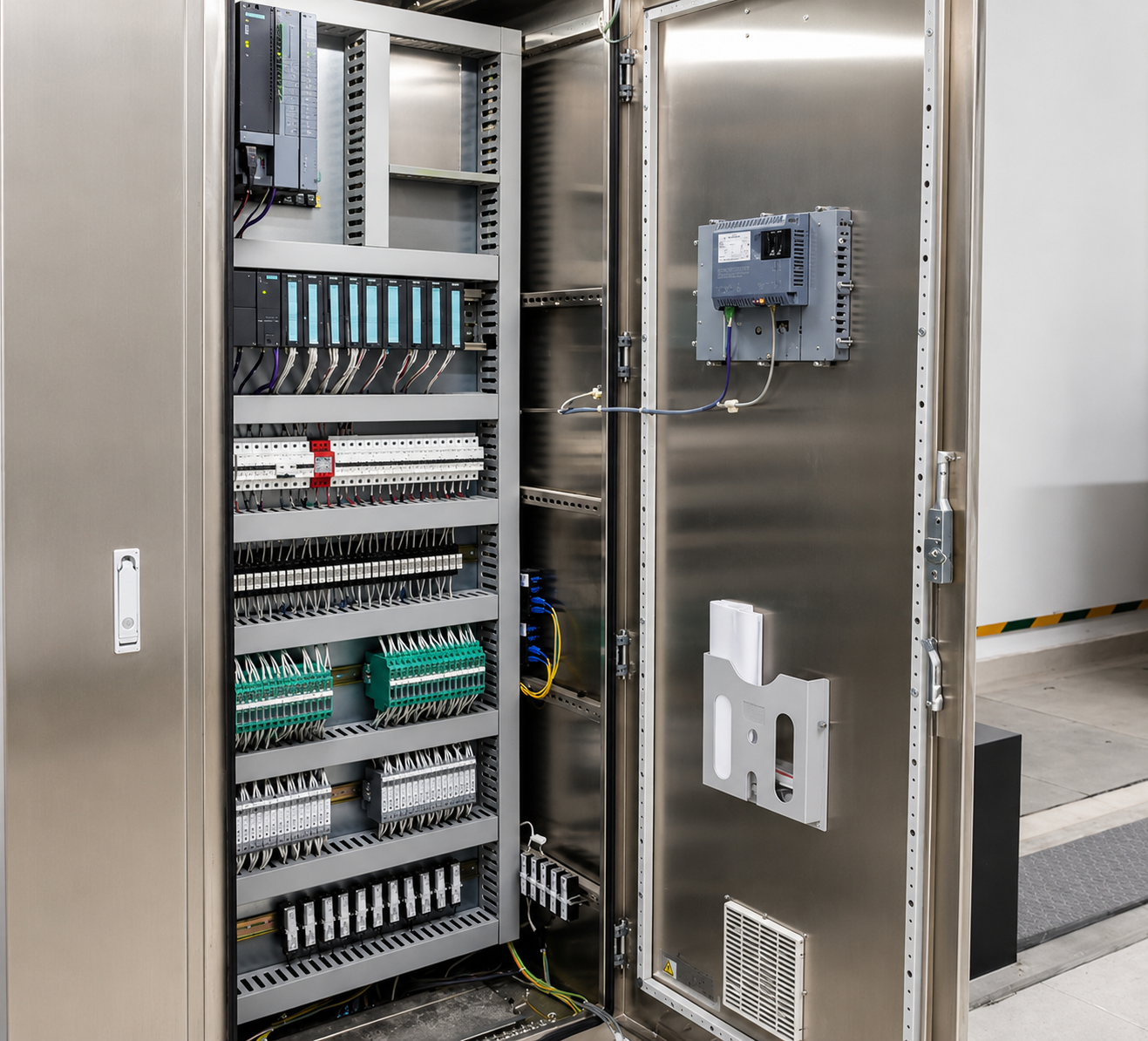
Our automation cabinets bring controllers, I/O, networks, power supplies and operator interfaces together in tested, documented assemblies, delivered with the PLC, HMI and SCADA software that runs them. Each project is engineered from your I/O list and control philosophy and built in our Hangzhou factory.
PLC and DCS Cabinets Overview
PLC-based systems are ideal for machines, pump stations and small to medium process plants: they are fast, flexible and cost-effective. DCS-based systems suit large continuous processes with many control loops and a single plant-wide database. Many sites use both — package units with their own PLCs connected to a central DCS. We build the hardware and software for either approach, and for the interfaces between them. Read PLC vs DCS for help choosing.
Cabinet Types
| Cabinet | Purpose |
|---|---|
| Controller cabinet | CPU (single or redundant), communication modules, network switches, power supplies |
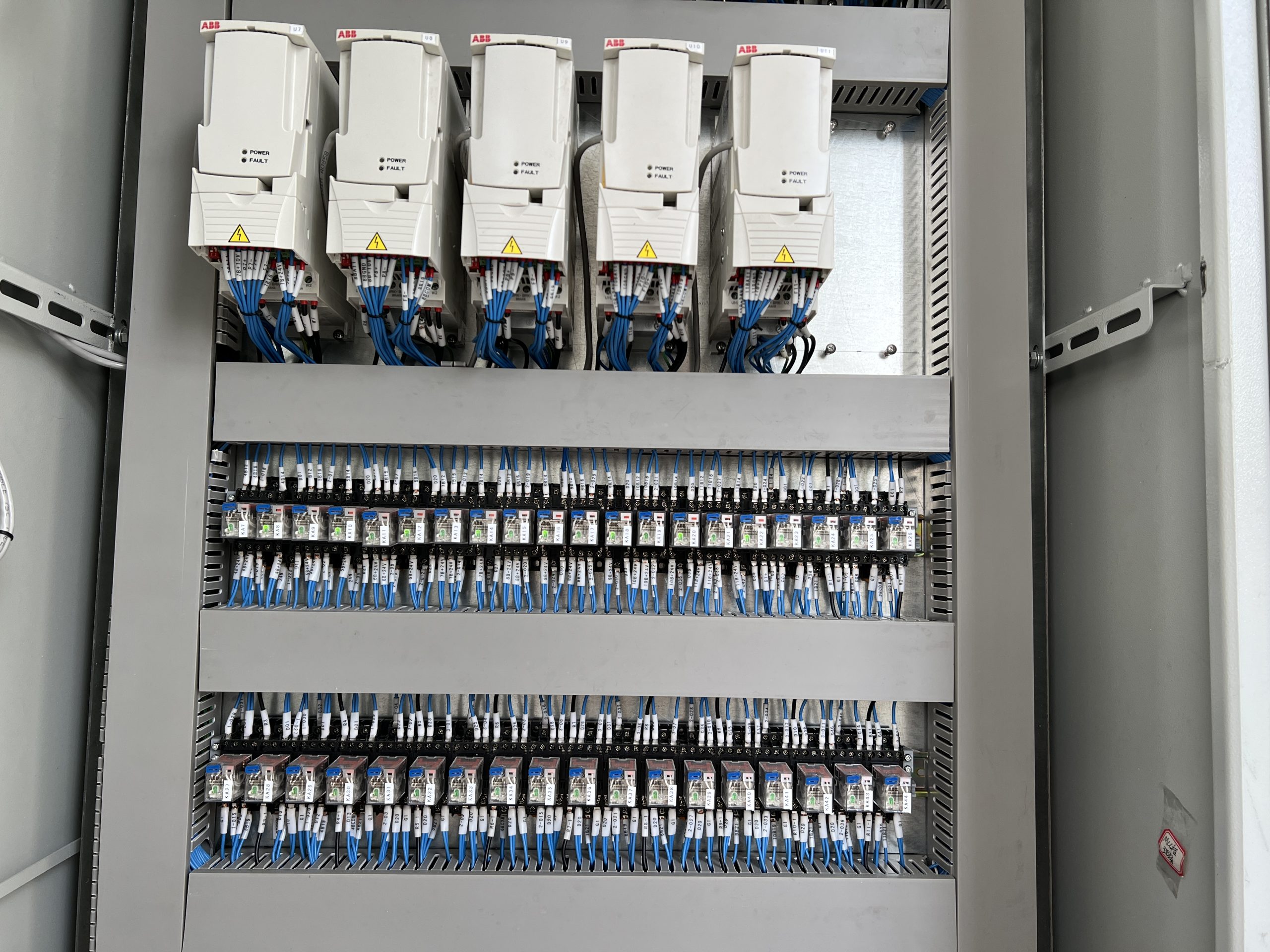
| I/O cabinet | Digital and analog I/O modules, signal isolators, fuses and terminals |
| Remote I/O cabinet | I/O placed close to field equipment, linked to the controller by fibre or Ethernet |
| Marshalling cabinet | Organises field cables from junction boxes before they reach the system cabinets |
| Power distribution cabinet | UPS-backed 24 V DC and AC distribution for the control system |
| Network / server cabinet | SCADA servers, historians, firewalls and managed switches |
| Local control panel | HMI and operator devices near the process |
Software We Deliver
- PLC programming – sequences, interlocks, PID loops and alarms, using IEC 61131-3 languages and standard function blocks.
- HMI screens – process graphics, alarms, trends and operator controls with a consistent style.
- SCADA – multi-site overviews, historians, reports and remote-station telemetry.
- Integration – Modbus TCP/RTU, PROFINET, EtherNet/IP, OPC UA and links to MES or cloud platforms.
More detail is on our automation software development page.
Key Features
- Designed from your I/O list and control philosophy
- Brand-flexible hardware matched to your site standard
- Redundant controllers, power and networks for critical processes
- Separation of power, control and signal wiring to minimise interference
- Clear labelling and documentation that match the software tags
- 10–20% spare I/O and space for future expansion
Applications
- Water and wastewater treatment plants and pumping stations
- Oil and gas facilities, pipelines and compressor stations
- Chemical, petrochemical and mineral processing plants
- Power distribution monitoring and control
- Manufacturing lines and material handling systems
Factory Acceptance Testing
Before shipment the cabinets and software are tested together. Every I/O point is checked from terminal to HMI, control sequences and interlocks are run with simulated signals, alarms are triggered and acknowledged, communication links are proven, and redundancy switchover is tested where applicable. You are welcome to witness the test in person or by live video, and the signed test records become part of the handover documentation.
Documentation
Each delivery includes the system architecture and network drawing, cabinet layouts, schematics and terminal lists, I/O list, control narrative, bill of materials, FAT records, program backups and operation and maintenance manuals.
Project Process
- Requirements and control philosophy – we agree operating modes, sequences, interlocks, alarms and setpoints with your process and electrical engineers.
- System architecture – controller type, redundancy, network topology, I/O distribution and interfaces to package units and SCADA.
- Hardware design – cabinet layouts, schematics, terminal lists and heat calculations, submitted for approval.
- Software development – PLC/DCS logic, HMI and SCADA built from tested libraries in parallel with cabinet assembly.
- Manufacturing – assembly, wiring, labelling and internal inspection in our factory.
- FAT – integrated testing of hardware and software with you present if required.
- Site support – installation guidance, loop checks, commissioning, loop tuning and operator training.
Migrating Legacy Control Systems
Many plants still run on controllers that are no longer supported, with spare parts that are hard to find and programs that few people understand. We help plan migrations that keep the plant running: documenting the existing logic, mapping old I/O to new hardware, reusing field wiring where possible with pre-wired adapter panels, converting programs to current platforms, and testing the new system in the factory before a short, planned cut-over. Migrating in stages — one process area at a time — spreads cost and risk.
Cybersecurity and Remote Access
Connected control systems need protection. Our designs separate control networks from office networks, use managed switches and firewalls where required, disable unused ports and services, and provide controlled, logged remote access for support. Passwords and user accounts are documented and handed over so the owner stays in control of the system.
Design for Maintenance
A control system is used for decades, so we design for the people who will maintain it. Standard function blocks make every motor and valve behave the same way, tag names match drawings and HMI screens, diagnostic pages show the health of controllers, networks and power supplies, and spare parts lists are supplied with every project. These details shorten fault-finding time and reduce reliance on the original programmer.
What to Send for a Quotation
- I/O list or P&IDs with instrument and motor lists
- Control philosophy or process description
- Preferred PLC/DCS, HMI and SCADA platforms
- Redundancy and communication requirements
- Cabinet location, IP rating and site conditions
See also our PLC control cabinet guide, water treatment automation and system integration services, or request a quote.
Example: Water Treatment Plant Control System
For a medium-sized water treatment plant we might supply a redundant main controller cabinet in the central control building, remote I/O cabinets at the intake, filter gallery, chemical building and treated-water pump station, all linked by a fibre-optic ring network so that one cable break does not stop communication. Each remote cabinet has local HMI access for operators and UPS-backed power. The SCADA servers in the control room show the whole plant, store trends for regulatory reporting and send alarms to on-call staff. Package units such as dosing skids and blowers, supplied by other vendors with their own PLCs, are connected over Modbus TCP and tested against an agreed interface list during the factory acceptance test.
Why Choose Danli
Hardware, software and testing come from one team, so there is no gap between the cabinet builder and the programmer. We work with the PLC and DCS brands your plant already uses, provide complete English documentation for export projects, and support commissioning and long-term maintenance through our after-sales service.
Environmental and Installation Considerations
Control cabinets are often installed in plant rooms that are hot, dusty or humid. We size enclosures and cooling from a heat-loss calculation at the site’s maximum ambient temperature, add anti-condensation heaters where needed, choose IP ratings and materials to suit the location, and provide lifting points, base frames and cable entry plates that match your installation. For outdoor kiosks we add sun shields and weather protection, and for long cable runs we include surge protection on power, signal and communication lines.
Frequently Asked Questions
Which PLC and DCS platforms do you work with?
We build cabinets and software for the major international platforms, including Siemens and Allen-Bradley PLCs, and leading DCS systems, according to your project standard.
Do you supply the software as well as the hardware?
Yes. We develop PLC logic, HMI screens and SCADA applications, and test them with the cabinets in a factory acceptance test.
Can you build marshalling and remote I/O cabinets for an existing DCS?
Yes. We build marshalling, remote I/O, interface and power distribution cabinets to the DCS vendor or client specification.
Is redundancy available?
Yes. Redundant controllers, power supplies, networks and I/O can be included for critical processes.