Waterworks automation uses PLCs or a DCS, field instruments, motor control and SCADA to run water treatment plants, pumping stations, reservoirs and distribution networks with little manual intervention. The control system keeps tank levels, pressures, flows and chemical dosing within limits, starts and stops pumps automatically, raises alarms, and records the data operators and regulators need.
This guide explains how a typical water project is structured, what each part of the control system does, and how the work is engineered, tested and commissioned. It is based on the way Danli designs and builds PLC/DCS cabinets for water and wastewater projects.
Key takeaways
- Most water projects use PLCs at each process area or remote site, linked to a central SCADA system.
- Large treatment works sometimes use a DCS for plant-wide control.
- Typical controlled processes: intake, coagulation and dosing, filtration, disinfection, storage and pumping.
- VFD-controlled pumps save energy and keep pressure stable.
- Factory and site acceptance tests are essential before the plant goes live.
What Does Waterworks Automation Control?
| Process area | Main equipment | Typical control functions |
|---|---|---|
| Raw water intake | Intake pumps, screens, level and turbidity sensors | Pump duty/standby, screen cleaning, low-level protection |
| Coagulation and flocculation | Dosing pumps, mixers, flow meters | Flow-paced chemical dosing, mixer speed control |
| Sedimentation and filtration | Sludge scrapers, filter valves, backwash pumps and blowers | Automatic filter backwash sequences, head-loss monitoring |
| Disinfection | Chlorine or UV systems, residual analysers | Residual control loops, dosing alarms |
| Clear water storage | Reservoir level sensors | Level-based pump control, overflow and dry-run protection |
| Distribution pumping | High-lift pumps with VFDs, pressure transmitters | Constant pressure control, pump rotation, surge protection |
System Architecture
Field level
Level, pressure, flow, turbidity, pH and chlorine analysers measure the process. Motor-operated valves, dosing pumps and pump motors carry out the control actions.
Control level: PLC or DCS cabinets
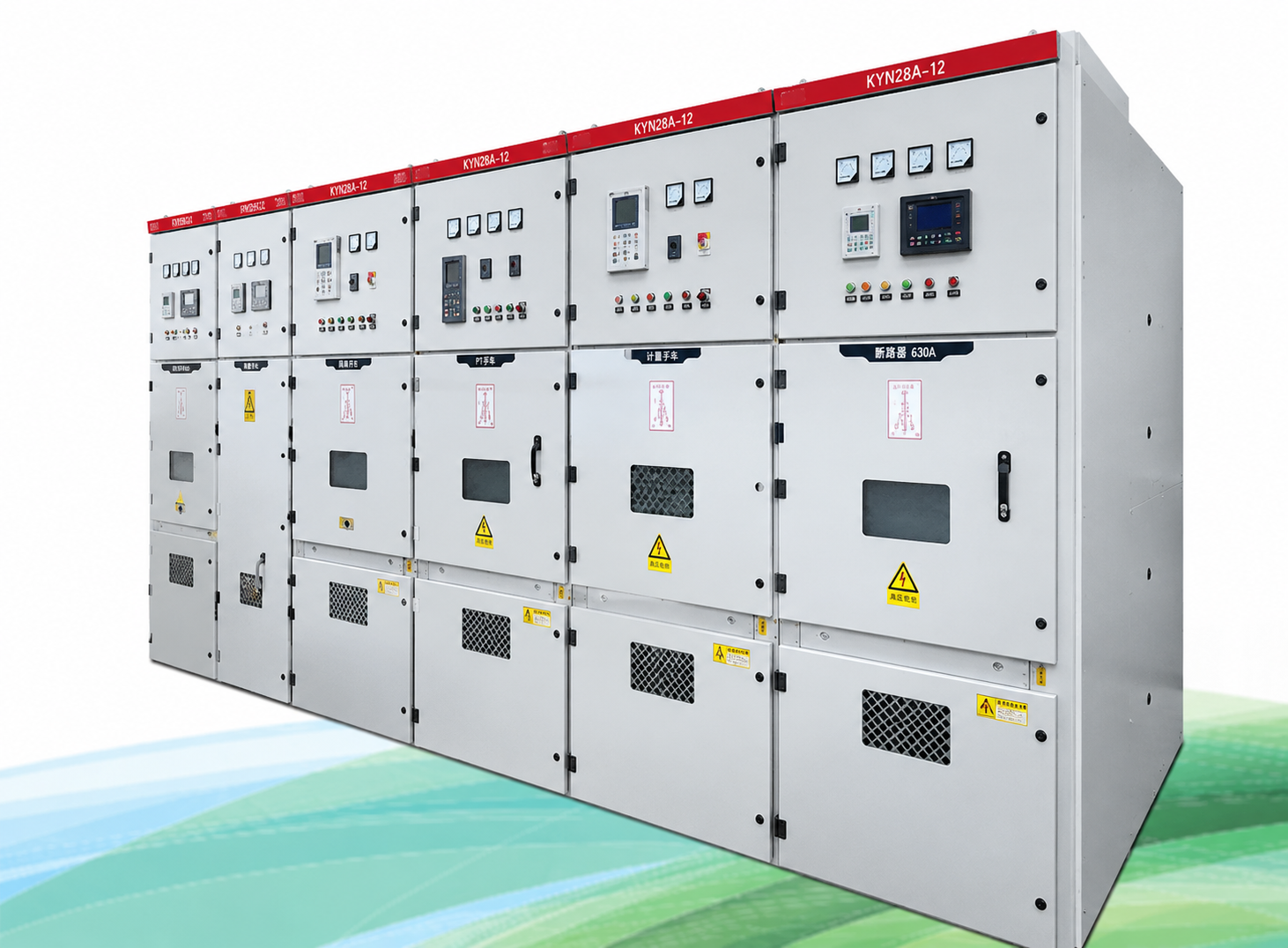
Each process area or remote pumping station usually has its own PLC cabinet, so a fault in one area does not stop the whole plant. Large plants with many interconnected control loops may use a DCS instead. Read PLC vs DCS to compare the two approaches.
Supervisory level: SCADA
A SCADA system in the control room collects data from all controllers, shows the plant on graphic screens, manages alarms, stores trends and produces reports. Remote sites are commonly connected by fibre, radio or cellular links.
Pump Control and Energy Saving
Pumping is the largest energy user in most water systems. Using VFD cabinets to vary pump speed, instead of throttling valves or switching pumps on and off, keeps network pressure steady, reduces water hammer and can cut pump energy use significantly. Typical control strategies include:
- Constant pressure control – the PLC adjusts pump speed to hold the discharge pressure at a setpoint.
- Duty/standby rotation – pumps alternate to equalise running hours.
- Level-based cascade – additional pumps start as reservoir level falls and stop as it recovers.
- Soft stopping – controlled deceleration to limit surge pressure in long pipelines.
How a Waterworks Automation Project Is Delivered
- 1. Requirements and control philosophy – agree the process description, operating modes, alarms and interlocks with the client and process engineer.
- 2. I/O list and single-line diagram – list every signal and electrical feeder; this drives cabinet size and PLC hardware.
- 3. Detailed design – electrical schematics, cabinet layouts and network architecture.
- 4. Cabinet manufacturing and programming – build, wire and label the cabinets; write PLC logic and SCADA screens.
- 5. Factory acceptance test (FAT) – test every I/O point and control sequence with the client before shipment.
- 6. Installation and site acceptance test (SAT) – connect field devices, test loops and run the plant under real conditions.
- 7. Training and handover – operator and maintenance training, as-built drawings and program backups.
Design Tips From the Field
- Keep 10–20% spare I/O and panel space; water plants are often expanded in phases.
- Choose enclosure ratings and anti-condensation heaters suitable for humid pump rooms and outdoor kiosks.
- Fit surge protection on long instrument and communication cables, especially at remote sites.
- Provide manual/auto selector switches and local controls so pumps can run if the network fails.
- Standardise PLC brand and programming style across all sites to simplify maintenance.
Summary
Good waterworks automation is less about any single product and more about a clear control philosophy, reliable cabinets, sensible pump control and thorough testing. When each process area has its own controller, every signal is documented, VFDs manage the pumps and SCADA brings the data together, plants run more safely, use less energy and are easier to expand. The same principles apply whether the project is a single booster station or a complete treatment works with dozens of remote sites.
Frequently Asked Questions
Most water and wastewater plants use PLCs with SCADA because the processes are modular and spread across several sites. Very large treatment works sometimes choose a DCS for centralised control.
PLCs carry out the real-time control at each process area or site. SCADA collects their data, displays it in the control room, manages alarms and stores history for reporting.
VFDs match pump speed to demand, which saves energy, keeps pressure stable, reduces water hammer and extends the life of pumps and pipes.
A factory acceptance test of the cabinets and software, followed by a site acceptance test of every instrument loop, motor and control sequence under real conditions.
Related Solutions
- Water treatment automation solutions
- PLC and DCS control cabinets
- VFD cabinets
- What is a PLC control cabinet?
Planning a water or wastewater project? Send us your I/O list or process description for a quotation.